
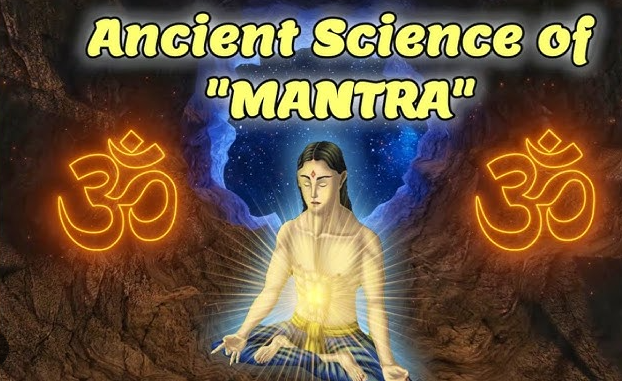
What is a Mantra? Definition & Origin
The word Mantra comes from the Sanskrit roots ‘Man’ (mind) and ‘Tra’ (instrument or tool), meaning “a tool of the mind” or “that which liberates the mind.” Mantras are sacred sounds, syllables, or phrases that have been chanted for centuries to bring focus, clarity, and spiritual awakening.
The origin of mantra chanting dates back to the Vedic period (around 1500–500 BCE) when sages discovered that specific sound vibrations had profound effects on human consciousness. Ancient Hindu, Buddhist, and Jain scriptures emphasize the transformative power of mantras, using them for meditation, healing, and invoking divine energies.
How Mantra Jaap Affects the Human Mind, Body, and Soul
- Impact on the Mind: Enhancing Focus & Reducing Stress
Scientific research suggests that mantra chanting has a direct impact on brain function. The rhythmic repetition of a mantra activates the prefrontal cortex, the area responsible for focus and decision-making.
Neuroscientific studies show that chanting mantras like Om synchronizes the left and right hemispheres of the brain, leading to a state of deep relaxation and mental clarity.
It reduces cortisol levels (the stress hormone), helping in anxiety relief and emotional balance.
Mantra jaap enhances neuroplasticity, which improves memory, creativity, and problem-solving abilities.
- Effect on the Body: Healing and Energy Activation
The vibrational frequency of mantras stimulates the body’s energy centers (chakras), promoting overall well-being.
Boosts Immunity: Mantra vibrations stimulate the vagus nerve, which improves immune response and reduces inflammation.
Regulates Heartbeat & Blood Pressure: Chanting slows down breathing and heartbeat, inducing a state of relaxation similar to deep meditation.
Balances Brainwave Activity: Studies have shown that mantra recitation increases alpha and theta brain waves, which are associated with deep relaxation and heightened awareness.
- Influence on the Soul: Spiritual Growth & Inner Peace
Mantras connect individuals with higher consciousness, promoting spiritual awakening.
Chanting mantras like Gayatri Mantra or Mahamrityunjaya Mantra aligns personal energy with the universal cosmic vibration.
It fosters a sense of inner peace, reducing negative emotions like fear, anger, and jealousy.
Regular mantra practice strengthens intuition and deepens meditation experiences.
Scientific Explanation: How Mantra Jaap Boosts Brain Productivity
- Activates the Reticular Activating System (RAS)
The RAS is a network of neurons in the brainstem responsible for filtering important information. When we repeatedly chant a mantra, the RAS helps our mind focus on positive intentions and eliminates distractions. This enhances concentration, goal-setting, and mental efficiency.
- Releases Dopamine & Serotonin
Mantra chanting stimulates the release of dopamine (the motivation hormone) and serotonin (the happiness hormone), which improves mood, reduces depression, and increases motivation.
- Strengthens Neural Pathways
The repetition of sound patterns creates new neural pathways, reinforcing positive thinking and enhancing problem-solving abilities. Over time, mantra practice rewires the brain for higher intelligence, emotional stability, and spiritual wisdom.
Conclusion: Unlock Your True Potential with Mantra Jaap
Mantra chanting is not just a spiritual practice—it is a scientifically proven technique to enhance brain productivity, emotional stability, and overall well-being. Whether for stress relief, improved focus, or spiritual growth, incorporating mantra jaap into daily life can bring profound transformations.
Start with a simple mantra like “Om” or “So Hum” and experience the shift in your mind, body, and soul.